
Noise Control in Aerospace: Advanced Solutions for Launch Vehicles, Satellites, Crew Capsules, and Strict Standards
In the aerospace industry, managing noise and vibration is critical for performance, safety, and comfort. From launch vehicles creating extreme sound pressure levels to satellites requiring precision functionality in harsh environments, effective noise control solutions play a vital role in ensuring mission success. The recent surge in space exploration—driven by both government initiatives and private enterprises—has amplified the need for advanced noise control technologies to meet the demands of this rapidly evolving sector.
The Challenges of Noise in Aerospace
- Launch Vehicles:
During liftoff, rocket engines generate intense acoustic energy that can damage structural components and onboard payloads. Controlling noise and vibration during these phases is critical to maintaining structural integrity and protecting sensitive onboard instrumentation. - Satellites:
During launch, structure-borne noise and vibration can compromise the performance of critical equipment. Managing these disturbances ensures the functionality of critical components such as solar arrays, payload instruments, structural components, electronics and circuitry, propulsion systems, thermal control systems, antennas, and communication systems. - Crew Capsules and Space Habitats:
Acoustic disturbances during space launches can significantly impact crew capsules and space habitat modules, particularly during the ascent phase when rocket engines generate extreme sound pressure levels. These disturbances, primarily low-frequency noise and vibrations, create physiological stress on the crew, and can impact the capsule’s habitat structure and onboard systems. - Strict Aerospace Standards:
Aerospace components must meet rigorous safety, performance, and material specifications. Manufacturers face the additional challenge of finding flight-proven suppliers that provide thermal-acoustic materials certified for use in high-performance aerospace environments. This may include consents by U.S. agencies such as NASA, The Federal Aviation Administration, The Department of Defense, and international organizations such as The European Space Agency. This limits the availability of suitable products and demands careful supplier vetting.
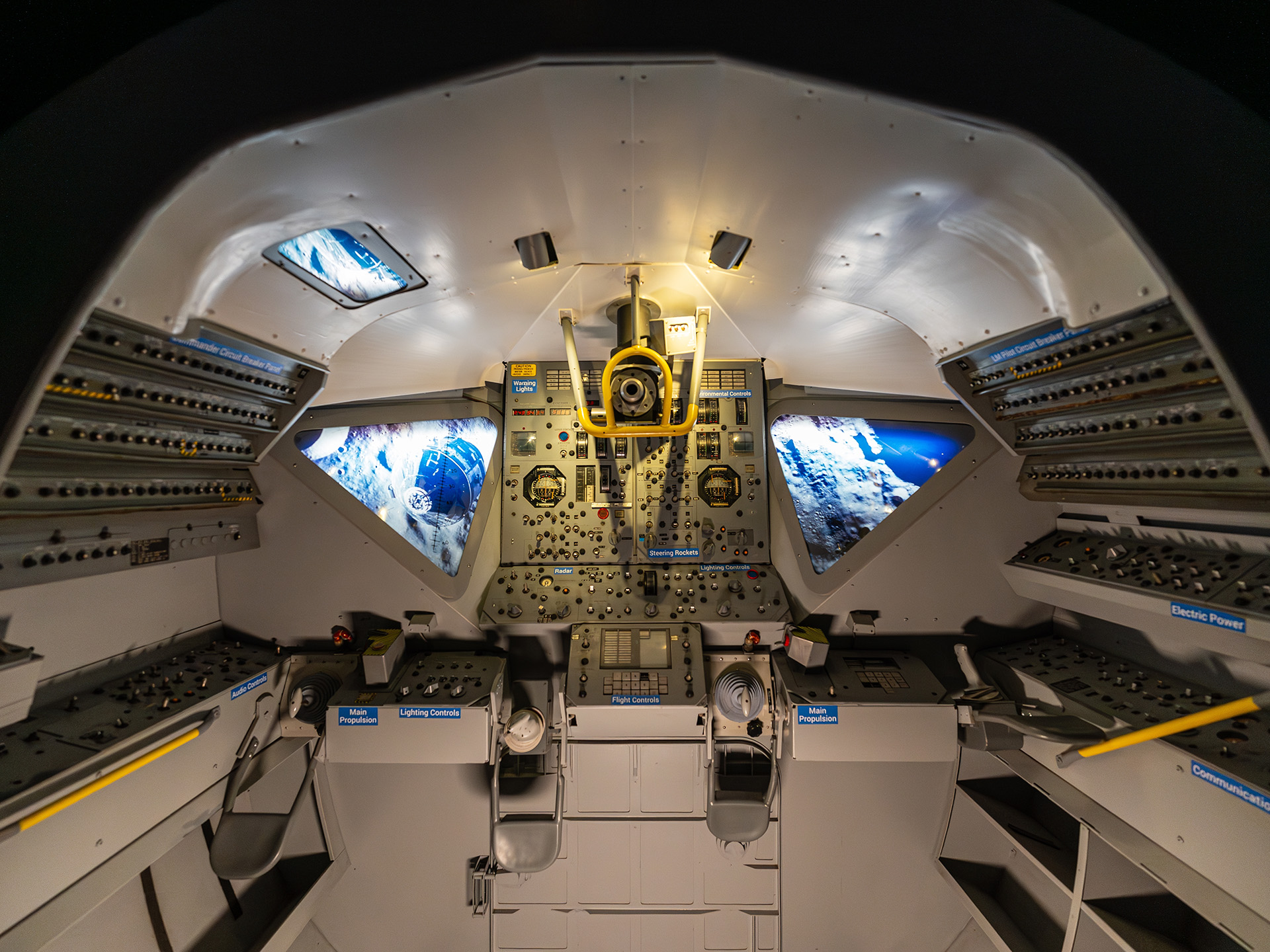
Image courtesy of Shutterstock.
How Thermal-Acoustic Materials Solve Noise Challenges for Aerospace
- Absorptive Open Cell Foams:
Open cell foams such as Soundfoam ML ULb and Soundfoam HTC are highly effective in absorbing sound energy, making them ideal for aerospace applications like noise-absorbing panels in rocket fairings, payload compartments or crew capsules. For payload fairings, the acoustic blankets are designed with engineered facings (films) to both protect the foam and improve the overall acoustics. For crew capsules, engineered fabrics are also often used to provide a pleasant appearance. For applications where moisture is a concern, hydrophobic (Soundfoam ML HY ULb) is an excellent option. - Damping Materials for Vibration Control:
Viscoelastic constrained-layer vibration damping materials minimize structure-borne noise and vibration, protecting sensitive components and ensuring long-term operational reliability. Since temperature impacts performance, it is important to work with a company who understands the complexities of vibration damping. Soundcoat’s DYAD material has even traveled beyond our solar system as part of the Voyager spacecraft program. - Laminated Composite Materials:
Absorptive materials can be further enhanced by laminating films, facings, adhesives and fabrics to offer multi-functional acoustic performance tailored to specific aerospace needs. Ultra-lightweight melamine-based Soundfoam ML ULb and polyimide-based Soundfoam HTC, combined with facings such as Kapton®, Mylar®, Tedlar® and Nomex® all deliver unique sets of attributes to meet aerospace demands. Application of the facings plays a critical role in the overall effectiveness of the acoustic panel.
Navigating Noise Control with Certified Materials & Processes
For aerospace manufacturers, sourcing materials that meet stringent standards is a significant hurdle. Certified thermal-acoustic solutions not only provide effective noise control but also ensure compliance with regulations critical to aerospace applications. Working with trusted suppliers who specialize in aerospace-grade materials reduces risk and accelerates the production process.
The Irvine, CA Soundcoat facility is proud to be a AS9100:2016 registered facility. It is also equipped with an FOD-free environmental control room where aerospace products that can meet stringent standards for cleanliness are assembled, and dimensional stability is maintained through humidity and temperature control.
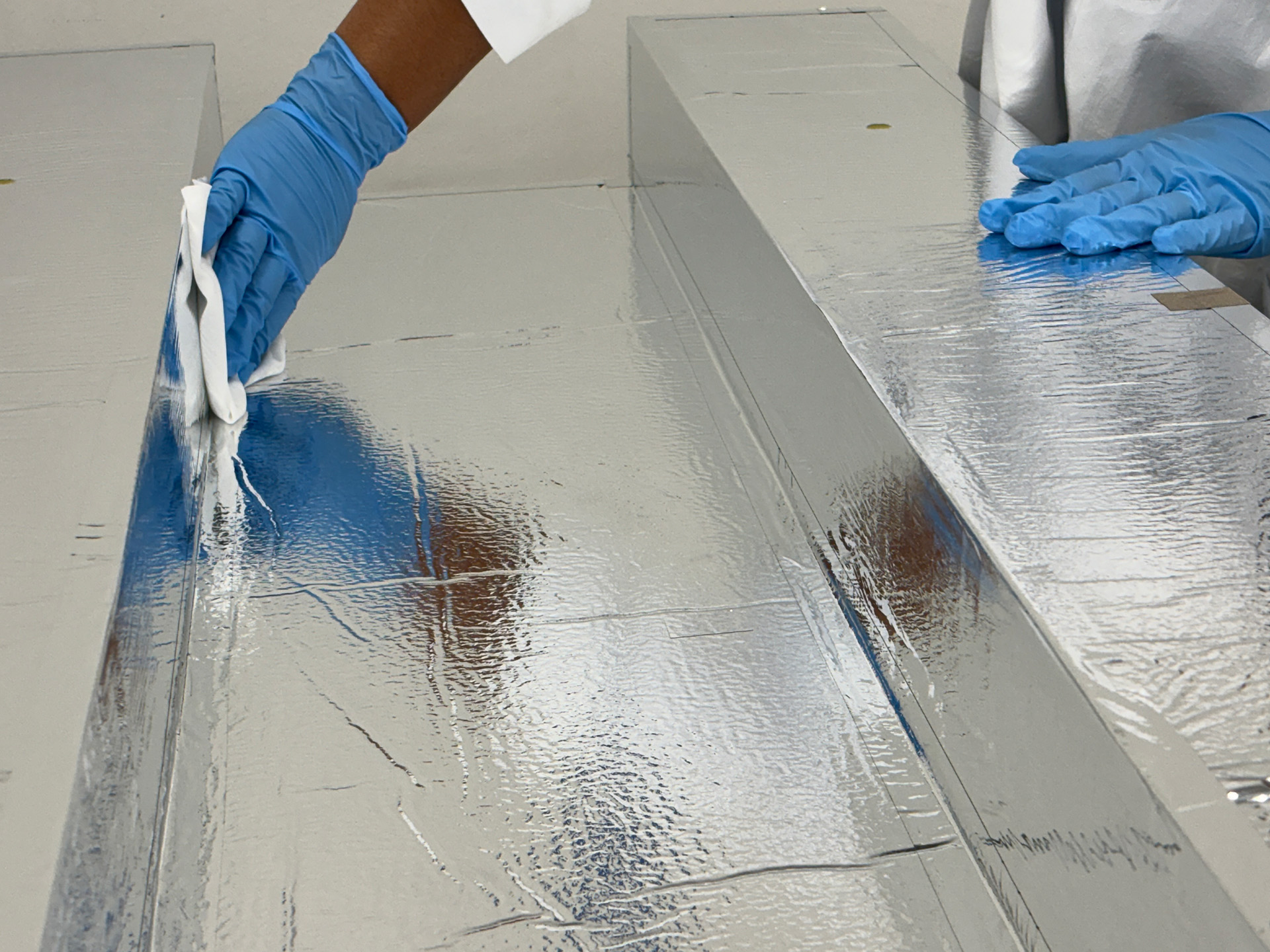
FOD-free environmental control room at the Soundcoat West Coast location. Soundcoat © 2024
The Growth of Space Exploration and its Impact on Acoustic Engineering
Space exploration is entering a new golden age, with initiatives from government programs like NASA’s Artemis missions and the European Space Agency, alongside private ventures from companies like SpaceX, Blue Origin, and Rocket Lab. The increased frequency of rocket launches, satellite deployments, and the ambition to establish a human presence on the Moon and Mars highlight the importance of noise control solutions. As these missions grow in complexity, the demand for advanced thermal-acoustic materials capable of withstanding extreme conditions and meeting stringent standards will only intensify.
Conclusion:
Noise control in aerospace is a complex but vital challenge. By leveraging advanced thermal-acoustic materials such as open-cell foams, damping solutions, and laminated composites—and ensuring compliance with strict aerospace standards—aerospace OEMs can address the unique demands of launch vehicles, satellites, crew capsules and space habitats. Collaborating with an experienced supplier who specializes in certified aerospace materials ensures access to tailored solutions that optimize performance and reliability in every mission.