From Earth to Orbit: Controlling Noise & Vibration on Artemis II
A Quiet Contribution to a Historic Mission
The Artemis II mission marks a defining moment in modern space exploration by returning humans beyond Earth’s orbit for the first time in more than 50 years. As NASA’s Space Launch System (SLS) carried astronauts on a 10-day journey around the Moon, it reflects a renewed commitment to exploration and discovery.
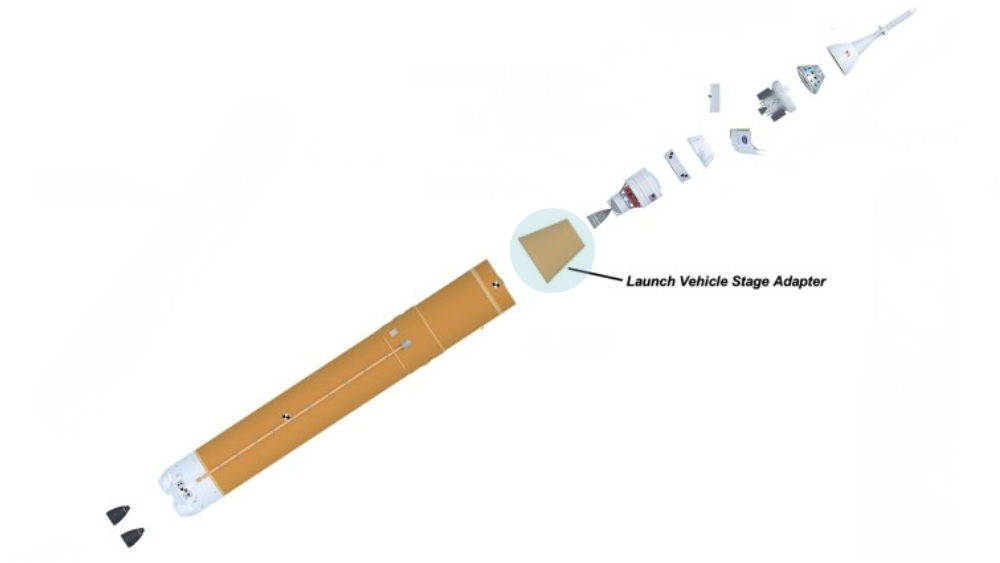
Soundcoat is proud to support NASA’s Artemis missions through the integration of specialized acoustic materials within the Launch Vehicle Stage Adapter (LVSA). This structural element connects the rocket’s core stage to the upper stage and crewed Orion capsule, playing a critical role in maintaining system integrity during ascent.
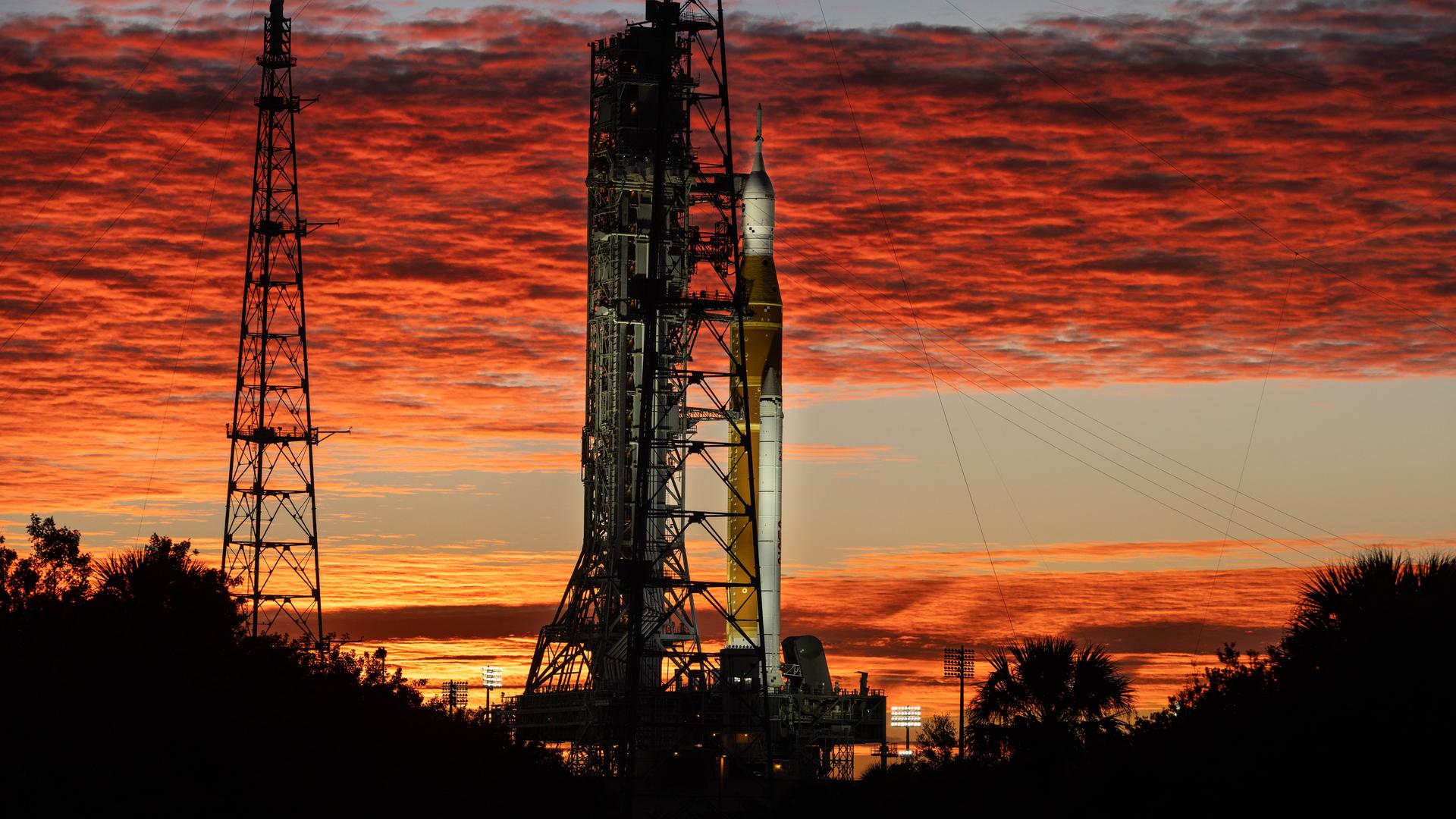
Top: Sunrise lights up the clouds behind Artemis II on the day of the launch. Image courtesy of NASA/Cory Huston.
Above: Diagram of the Orion shuttle, shown with key areas separated and the Lauch Vehicle Stage Adapter highlighted. To learn more about the LVSA, check out the SLS LVSA Fact Sheet on NASA’s website.
Managing Extreme Acoustic Environments
Rocket launches generate one of the most severe acoustic and vibrational environments encountered in engineering. Intense sound pressure levels and structural excitation can create resonance and vibroacoustic loading that threaten sensitive systems.
Within the LVSA, Soundcoat materials were engineered to help protect the propulsion and avionics systems during ascent by:
- Preventing resonance amplification
- Reducing vibroacoustic loading
The propulsion and avionics mechanisms are essential to ensuring that other key systems perform reliably as the vehicle transitions from ground to orbit under extreme dynamic conditions.
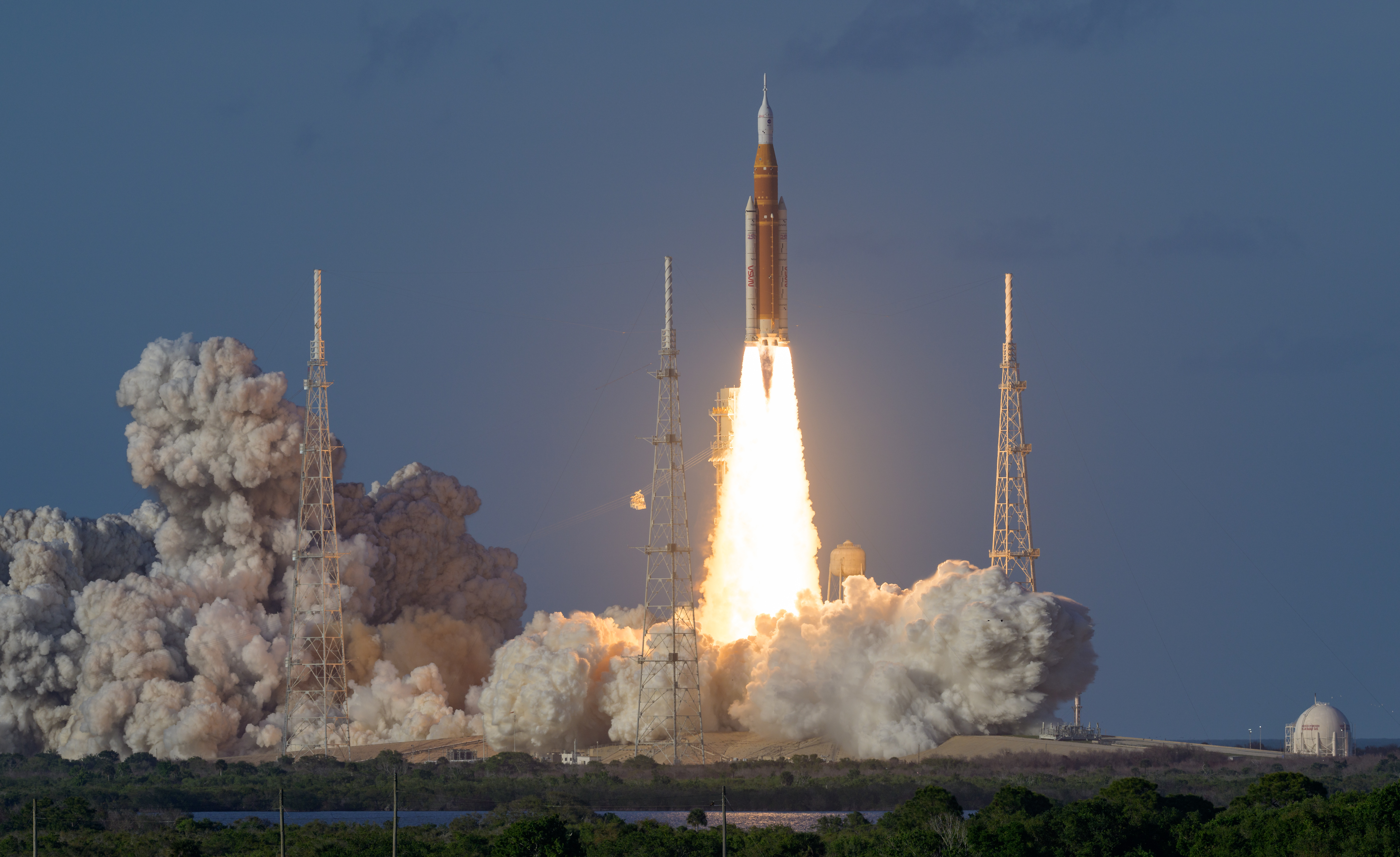
Artemis II launched April 1, 2026. Image courtesy of NASA/Bill Ingalls.
Engineered for Mission-Critical Performance
Applications like Artemis II demand more than standard solutions. Materials must meet strict aerospace requirements while delivering consistent performance in highly variable and strenuous conditions.
These strict requirements reflect Soundcoat’s experience supporting aerospace programs such as Boeing’s Delta and Sea Launch initiatives since the 1990s, along with broader expertise delivering acoustic solutions for taxing environments. That experience is supported by in-house engineering, advanced testing capabilities, and specialized manufacturing processes, which enable a tailored approach to controlling noise and vibration where precision performance is non-negotiable.
Building on Experience, Preparing for What’s Next
As space exploration evolves, emerging applications will require robust solutions to manage noise, vibration, and thermal conditions in increasingly complex environments, while also supporting sustained human activity and infrastructure beyond Earth.
Soundcoat is committed to meeting this growing demand; our manufacturing footprint in Southern California is in the process of expanding to deliver acoustic and thermal solutions for the next generation of missions. This exciting development will increase our manufacturing capacity and capabilities to support global aerospace customers and partners.
Looking Ahead
Artemis II represented an important step toward the next phase of human space exploration. As launch systems evolve and mission mandates increase, the need for effective noise and vibration control, as well as thermal management, in rocket launch and space environments will continue to grow.
Soundcoat is honored to contribute to this effort by supporting the reliability and performance of systems that make these missions possible.