What's Better for Industrial Noise: Absorption, Barriers, or Damping?
TL;DR: The answer depends entirely upon the noise problems you're trying to solve and the level of effectiveness you're trying to achieve. Sound absorption reduces reflection; sound barrier blocks transmission, and vibration damping reduces noise generated by resonating structures. In industrial environments, the most effective solution often combines all three.
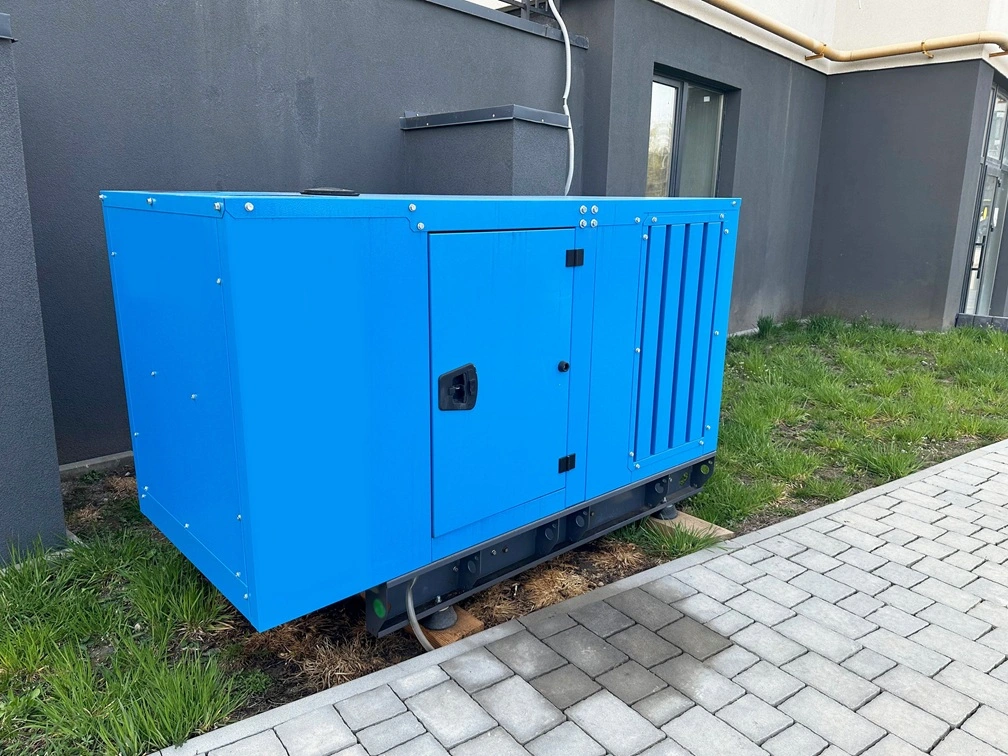
Top image: Back-up power diesel generator in metal enclosure installed near building.
Plant managers, OEM engineers, facility operators, and EHS professionals often ask the same question when confronted with a noise problem: "What's better: noise absorption, barriers, or damping?" The short answer: none of these are universally better than the others.
The right approach depends on:
1) Understanding how the noise is being generated.
2) Its path of travel.
3) Where people are being exposed to it.
Before selecting materials, it's important to determine whether the primary challenge involves reflected sound, transmitted sound, vibration, or some combination of all three. At Soundcoat, we've spent decades helping industrial customers solve complex acoustic challenges through engineering services, material sourcing, custom fabrication, composite material creation, and manufacturing. One lesson consistently emerges from these projects: successful noise control starts with understanding the problem, not choosing a product.
Why Many Industrial Noise Control Projects Miss the Mark
Many customers begin searching for acoustic materials before identifying the source of their noise problem.
Common misconceptions include:
- Assuming acoustic foam alone can stop noise from passing through walls or enclosures.
- Believing heavier materials provide a complete solution.
- Focusing just on the loud machine rather than the transmission path of sound.
- Looking for "soundproofing" solutions; the only real solution is sound management.
- Overlooking vibration as a significant contributor to noise.
These misunderstandings often lead to ineffective material selections and disappointing results. The reality is that absorption, barriers, and damping each solve different problems. Understanding those differences is the first step toward an effective noise-control strategy.
Sound Travels Like Water
One practical way to think about sound is to compare it to water.
Absorbing a noise "spill" can work as long as the absorber is the right material for the frequency. A barrier may block the direct path of sound, but when openings exist for cooling air, ventilation, maintenance access, or process requirements, sound can escape through those paths. A stable shoreline can absorb waves (AKA: vibration energy).
In many industrial applications, the challenge becomes balancing airflow requirements with acoustic performance. This may mean modifying the materials used, as well as the application and placement. With this analogy in mind, let's dive into the various types of noise control for industrial applications.
Understanding Noise Absorption
Noise absorption materials help reduce reflected sound energy.
When sound waves strike hard surfaces, they reflect into the environment. Inside industrial enclosures or manufacturing spaces, these reflections can compound and increase overall noise levels.
Absorptive materials reduce these reflections by converting a portion of the sound energy into small amounts of heat.
When Noise Absorption Works Best
Absorption materials are effective:
- When placed in the direct path of the sound.
- When sound is reflected within an enclosed space.
For industrial equipment specifically, absorption is commonly used inside machine housings, equipment enclosures, and acoustic treatment systems.
Understanding Noise Barriers
Noise barriers are designed to block sound transmission from one area to another. Rather than reducing (or absorbing) direct and reflected sound, barriers interrupt the path between the noise source and the receiver.
When Barriers Work Best
Barrier systems are commonly used when:
- Equipment noise must be contained.
- Acoustic enclosures or shielding systems are required.
However, barriers are only as effective as their placement so that they block the path of sound travel.
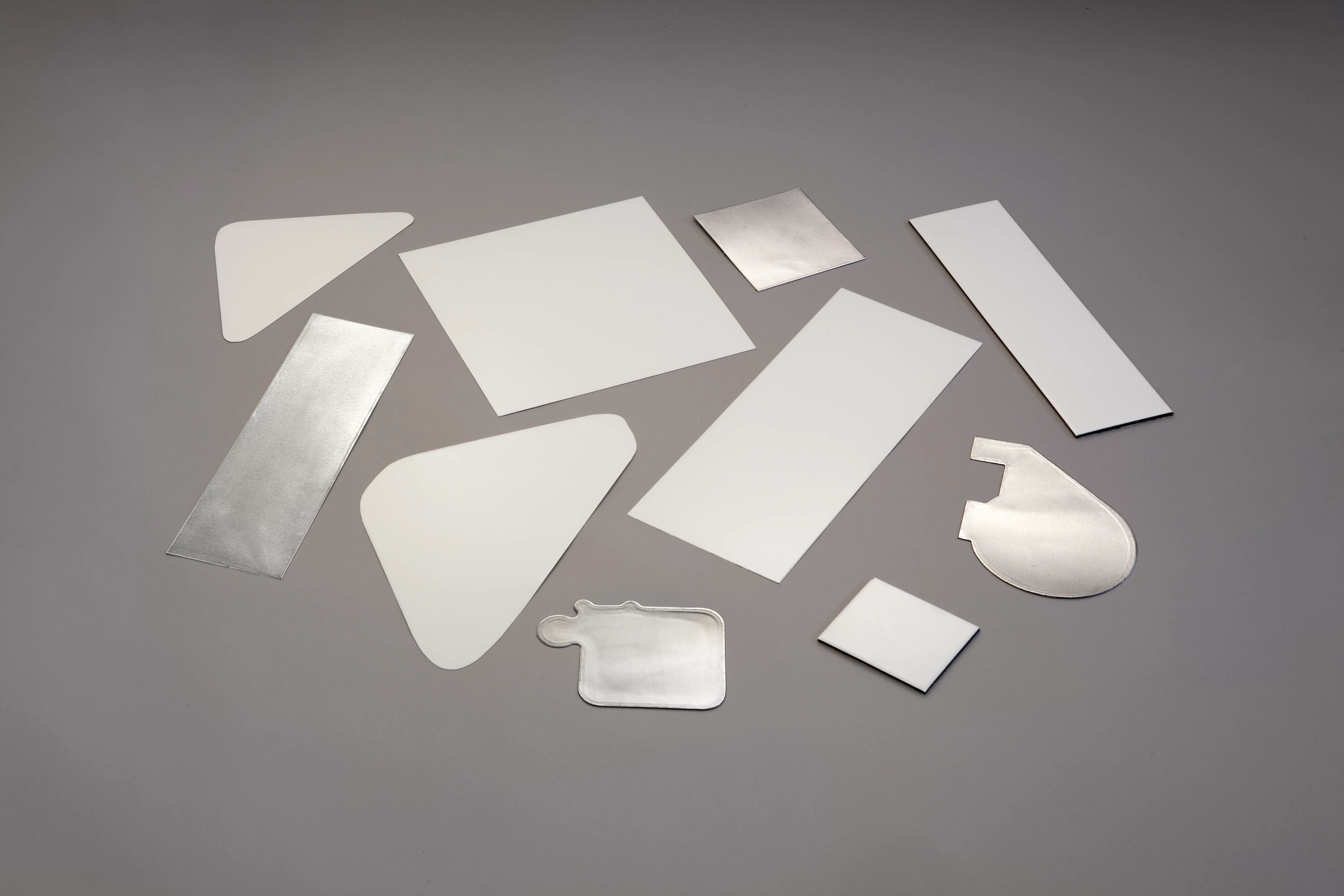
Image below: Sheets of Soundcoat damping materials in various shapes and sizes.
Understanding Vibration Damping
Damping addresses a completely different aspect of noise generation.
Many industrial systems generate structural vibration from excited surfaces. Metal panels, housings, guards, and enclosures can vibrate and become secondary noise sources called "structure-borne noise".
In these situations, the enclosure itself may be contributing significantly to the overall noise problem.
When Damping Work Best
Damping is particularly valuable when:
- Metal panels rattle during operation.
- Equipment housing resonation.
- Motors generate vibration.
- Compressors excite nearby structures.
- Thin-gauge metal components radiate sound.
Without damping, vibration energy can continue generating noise even when absorption or barrier materials have been installed.
Why Many Industrial Applications Require All Three
The Advantage of Multiple Noise Control Systems
For many industrial applications involving motors, compressors, generators, and other noisy equipment, multiple systems can provide the most effective solution. These systems can combine:
- Absorptive layers to reduce reflected noise.
- Barrier materials to limit airborne sound transmission.
- Damping layers to reduce vibration and panel resonance.
Because each layer addresses a different acoustic mechanism, the overall performance is often greater than any individual treatment can provide by itself.
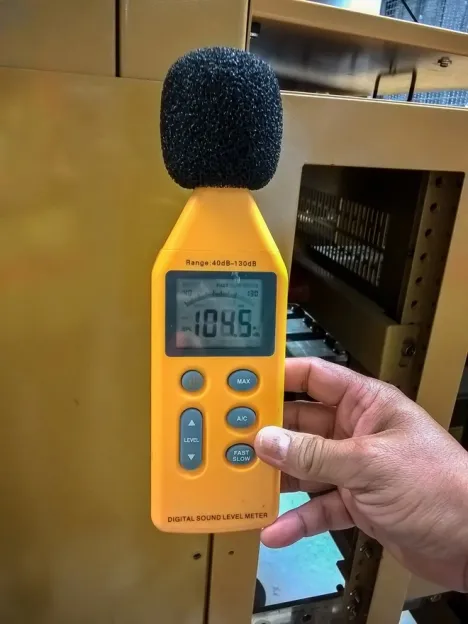
Image right: Diesel generators commonly produce >100dB of noise, negatively impacting hearing, communication, and the ability to focus.
A Real-World Example: Genset Noise Reduction
An OEM of diesel generator sets approached Soundcoat seeking ways to significantly reduce equipment noise before units were delivered to customers.
At first glance, the challenge appeared to be a straightforward airborne-noise issue. However, closer examination revealed multiple sources of noise.
The generator itself produced significant operating noise, while the metal enclosure cabinet generated additional sound through vibration and rattling.
The Recommended Solution
Rather than relying on a single product category, Soundcoat recommended a combination approach:
- A composite material called Soundmat PB was applied to work double duty with absorption & barrier materials.
- The two outer layers of Soundfoam M absorbed airborne noise being produced by the motor.
- A mass-loaded vinyl sheet was sandwiched between the two layers of absorption material to block the noise transfer outside the metal housing.
- Additional damping material of Soundfoil RT was applied to the exterior of the enclosure to damp the vibration energy, therefore reducing the structure-borne noise.
The OEM was also encouraged to communicate to their end users to consider further acoustic analysis if site-specific conditions created additional noise concerns after installation.
The project illustrates an important principle: reducing noise at the source is often only part of the solution. The surrounding environment and transmission paths may require further evaluation once equipment is operating in its final location.
"Soundproof" is a Misnomer
The term "soundproofing" is often used as a catch-all phrase, but it rarely reflects the true objective of industrial noise-control projects. Trying to eliminate all sound is not warranted or achievable. Let's examine why.
If one were to truly prevent any sound from escaping from an enclosure, the amount of airflow restriction that would be required to do so would create a hazardous environment for the machine. A high level of heat would build inside the enclosure, creating a situation ripe for combustion or engine failure.
Further, one of the ways to know if a machine is operating properly is to listen to its performance. Unusual rattles or hums can help workers monitor engine performance and address problems before they escalate. If no one can hear the machine, maintenance problems could go unnoticed.
Instead, when people say "Soundproofing" what they really mean is:
- Reduce employee noise exposure.
- Improve workplace conditions.
- Meet customer requirements.
- Satisfy regulatory objectives.
- Address noise complaints.
Understanding this distinction helps establish realistic expectations and leads to more practical solutions.
When Acoustic Analysis Complements Materials
Sometimes the biggest challenge is not selecting a material; it's determining what problem needs to be solved.
Acoustic analysis becomes especially valuable when:
- Multiple noise-control efforts have failed.
- Employee complaints continue.
- Regulatory compliance is in question.
- Multiple noise sources are present.
- The primary transmission path is unclear.
- It is difficult to determine whether reflection, transmission, or vibration is driving the issue.
In these situations, a diagnostic approach frequently delivers better results than purchasing additional materials without understanding the root cause.
Why Engineering Should Drive Material Selection
Acoustic materials are tools, not solutions by themselves. Successful industrial noise-control programs begin by identifying:
- Where noise originates.
- How noise travels.
- Which surfaces radiate sound.
- Which paths expose workers or nearby occupants.
Only after those questions are answered can the most effective combination of absorption, barrier, and damping materials be selected. This is why engineering-first approaches consistently outperform product-first approaches.
Conclusion
So, what's better: noise absorption, barriers, or damping? The answer depends on the specific noise problem.
Absorption reduces sound reflections. Barriers reduce sound transmission. Damping reduces noise caused by vibrating structures. In many industrial applications, all three contribute to a successful outcome.
Before buying sound absorbers, barriers, or damping materials, identify all noise sources and paths of travel. Once you understand how the noise is being generated and transmitted, selecting the right solution becomes much more straightforward and far more effective.
Looking for advice on testing, material recommendations, or acoustic engineering? Contact the experts at Soundcoat!