How Sound Cameras Enable Precision Engineering for Noise Control
In the field of acoustic engineering, identifying and isolating sound sources is essential for effective noise control. A sound camera provides an industry-leading solution, offering precise visual representations of sound emissions. This advanced technology allows acoustic engineers to expertly pinpoint the origins of noise and assess the impact of various sound treatments on the surrounding environments.
What is a Sound Camera?
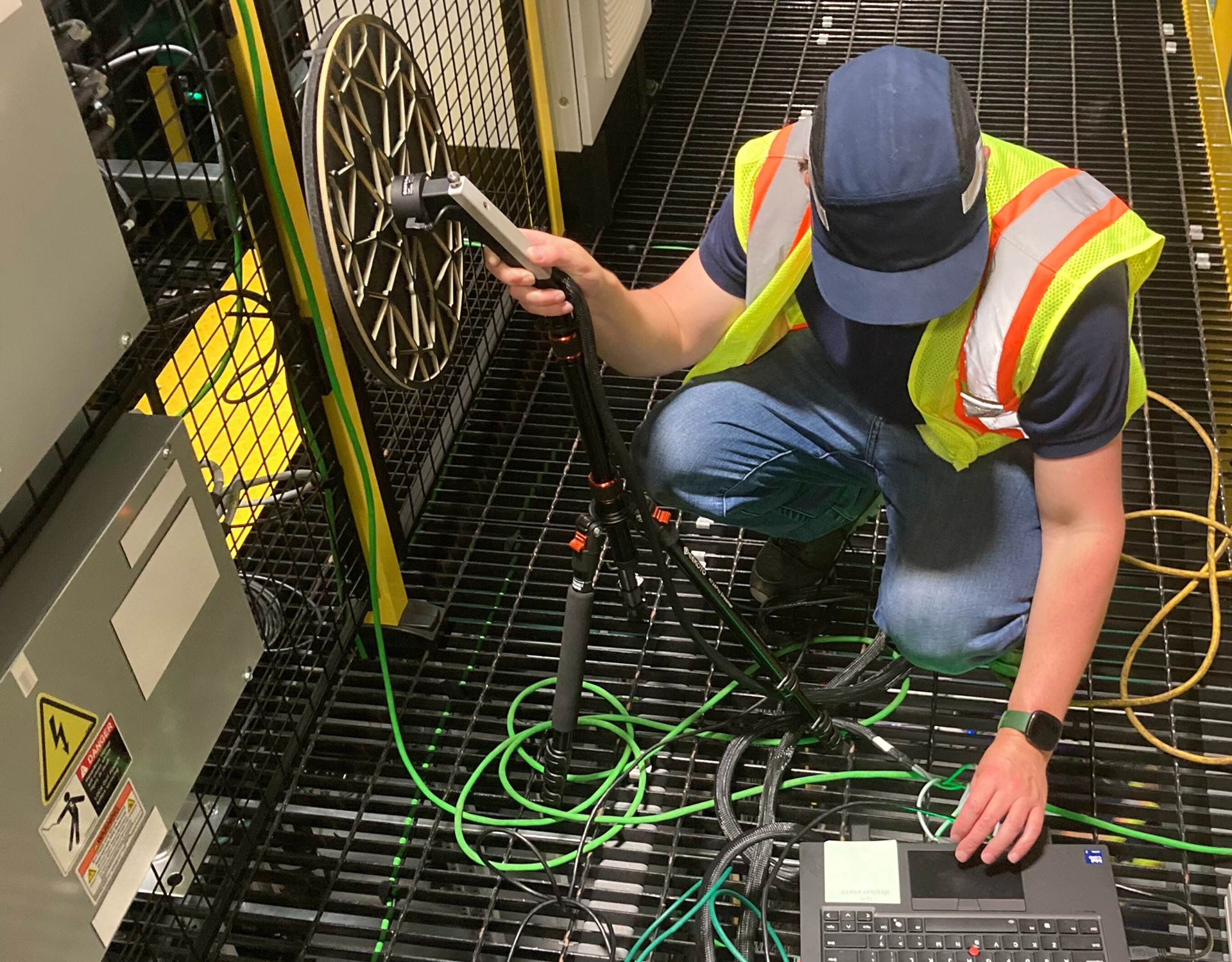
A sound camera is an advanced tool that combines traditional acoustic microphones with high-resolution cameras to visualize sound emissions. By using a series of microphones placed on an array, a sound camera detects the sound pressure levels and generates a visual map or heatmap, displaying sound intensity and location in real-time.
This technology provides engineers with a data-driven way to identify noise issues and focus remediation efforts on the exact sources of noise, improving the overall effectiveness of noise reduction strategies.
How Sound Cameras Are Used in Acoustic Engineering
Sound cameras are used in various industries, including vehicles, aerospace, industrial equipment, and building construction. Here are some common applications:
- Vehicle Noise Testing:
In heavy duty vehicles, engineers use sound cameras to pinpoint sources of noise in vehicles, which helps identify where noise reduction measures, like acoustic foam or barrier materials, can be applied. - Product Development and Testing:
Sound cameras allow engineers to test prototypes for noise emissions before the product goes into production or market. Whether it’s identifying unwanted noise from a motor or locating vibration noise, sound cameras provide a detailed, visual representation that makes it easier to assess the problem and take corrective actions. - Building and Construction:
In the construction industry, sound cameras are used to measure concentrations of noise in buildings during facility audits. Once identified, engineers can work to improve the acoustic performance of the space. This application is crucial in ensuring buildings meet acoustic standards, improve sound attenuation between spaces, and enable effective employee communication.
Where Sound Cameras Can Be Used
Sound cameras are versatile tools that can be used in various controlled environments and onsite settings:
- In a Hemi-Anechoic Chamber: When testing for sound power or transmission loss, a hemi-anechoic chamber, like the one in Soundcoat’s R&D acoustics lab, offers a controlled environment. Sound cameras can be used here to pinpoint noise sources and easily reproduce testing scenarios. This is particularly valuable for evaluating sound emissions from products like motors, appliances, and machinery.
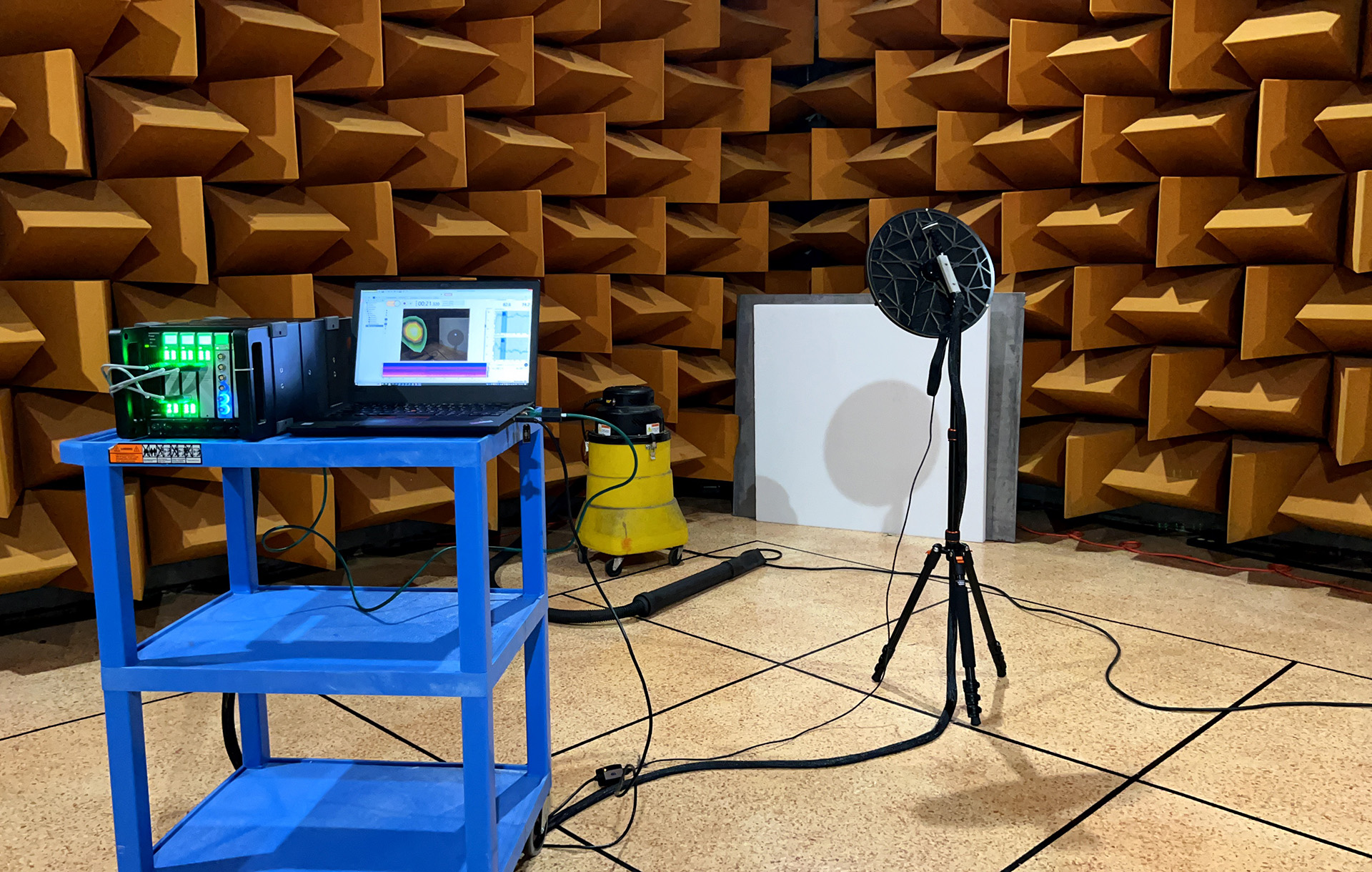
Inside Soundcoat hemi-anechoic chamber with a sound camera in use in front of a motorized appliance. Soundcoat © 2024
- Onsite at Customer Locations: One of the most powerful uses of sound cameras is onsite testing. Whether in a factory or an industrial plant, indoors or outdoors, sound cameras allow acoustic engineers to perform real-time, visual assessments of noise problems directly at the source. This on-the-spot analysis provides immediate feedback, helping clients make informed decisions about noise control solutions.
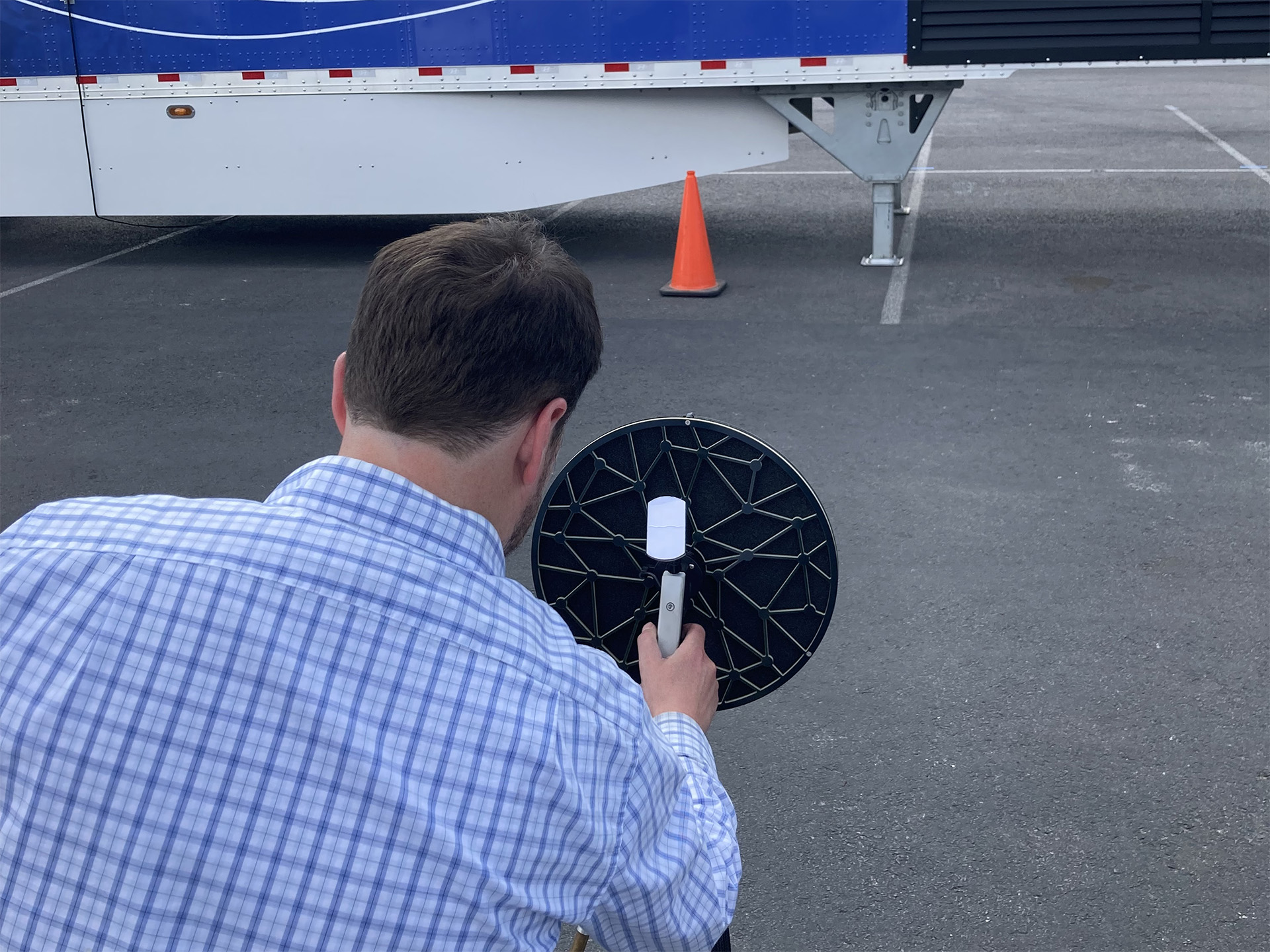
Acoustic engineer using B&K acoustic camera array to identify the sources of noise coming from an outdoor mobile power generation unit. Soundcoat © 2024
Why Sound Cameras Are Essential for Noise Control
Sound cameras are an essential tool in modern acoustic engineering because they enable precise and efficient noise detection. Their ability to provide a visual map of sound intensity and direction accelerates the process of diagnosing noise problems, reducing the time and cost of traditional testing methods.
Soundcoat acoustic engineers not only conduct sound camera testing, but we then also take the next step and target the exact areas that need modification with sound-absorptive materials, sound barriers, or damping solutions.
Conclusion: The Future of Acoustic Engineering with Sound Cameras
As the demand for effective noise control continues to grow across markets and applications, the need for trained sound camera use, combined with effective noise-reducing materials solutions, will only increase. By enabling real-time visualizations of sound, sound cameras are transforming the way acoustic engineers approach noise control, sound attenuation, and rapid prototyping.
For OEM product designers and engineers, incorporating sound camera technology from Soundcoat can prove to be a valuable return on investment, ensuring the creation of quieter, high-performance products that meet industry standards and exceed customer expectations.